Field Circuit Test
- Set ohmmeter to X1 range. Connect one ohmmeter probe to regulator terminal "A". See Fig 1. Connect other ohmmeter probe to regulator terminal "F". Spin alternator pulley. Reverse ohmmeter probes and repeat test.
- In one test, resistance should be 2.2 - 100 ohms, and may fluctuate while pulley is spinning. When connections are reversed, resistance should fluctuate between 2.2 and 9 ohms.
- Infinite resistance in one test, and approximately 9 ohms resistance in reverse test, indicates open brush lead, worn or stuck brushes, bad rotor assembly, or loose mounting screws at regulator brush holder.
- Resistance less than 2.2 ohms in both tests indicates shorted rotor or bad regulator. Resistance considerably greater than 9 ohms in both tests indicates a defective regulator or loose terminal "F" screw.
- Connect one ohmmeter probe to alternator rear housing. Connect other probe to terminal "F" screw. See Figure. Reverse probes and repeat test. Resistance should be infinite in one direction and approximately 9 ohms in other direction. Resistance less than infinite in both directions indicates grounded brush lead or bad regulator. Resistance greater than 9 ohms in both directions indicates bad regulator or damaged terminal connection.
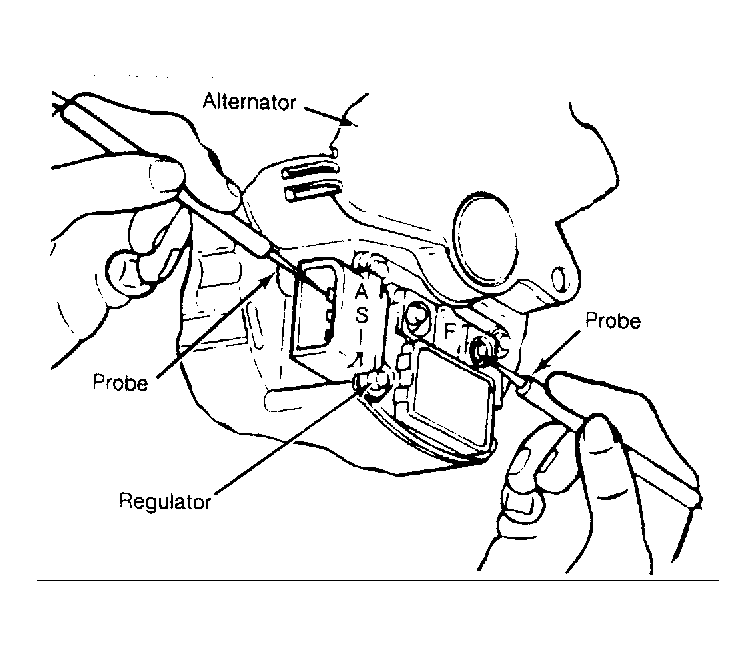 Courtesy of FORD MOTOR CO.