All Doors Do Not Lock
- Check fuse No. 37 (20-amp). If fuse is okay, go to next step. If fuse is blown, inspect wiring for short. Repair as necessary and replace fuse, then retest system.
- Disconnect battery ground cable. Using ohmmeter, check Black/White wire for open between memory lock relay and fuse. If resistance is less than 5 ohms, go to next step. If resistance is 5 ohms or more, repair open in Black/White wire, then retest system.
- Remove fuse No. 37 (20-amp). Remove memory lock relay. Measure resistance between output side of fuse and ground. If resistance is more than 10 k/ohms, go to next step. If resistance is 10 k/ohms or less, check Black/White wire for short to ground, then retest system.
- Remove memory lock relay from instrument panel fuse block. Measure resistance between memory lock relay terminals No. 85 and 86. See Fig 1
. If resistance is 5 ohms or less, go to next step. If resistance is more than 5 ohms, replace relay, then retest system.
- Disconnect 26-pin GEM connector C233. Measure resistance of Red/Black wire between 26-pin GEM connector C233 and memory lock relay connector. If resistance is 5 ohms or less, check for faulty door lock switches or binding door lock actuator linkage. If resistance is more than 5 ohms, repair open in Red/Black wire, then retest system.
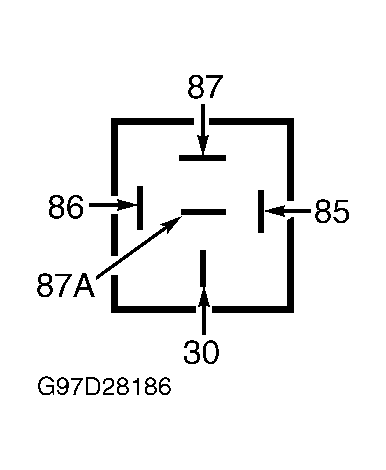 Courtesy of FORD MOTOR CO.