Brake Light Failure Sensor Test
- First make sure the brake lights come on when the brake pedal is pressed.
- If all the brake lights come on, go to step 2.
- If one of the brake lights does not come on, check whether the bulb is blown. If the bulb is OK, go to step 2.
- If none of the brake lights come on, check the brake light circuit (see CIRCUIT DIAGRAM - BRAKE LIGHT
).
- Open the tailgate, and remove the left rear side trim panel (see TRIM REMOVAL/INSTALLATION - REAR SIDE LOWER A
).
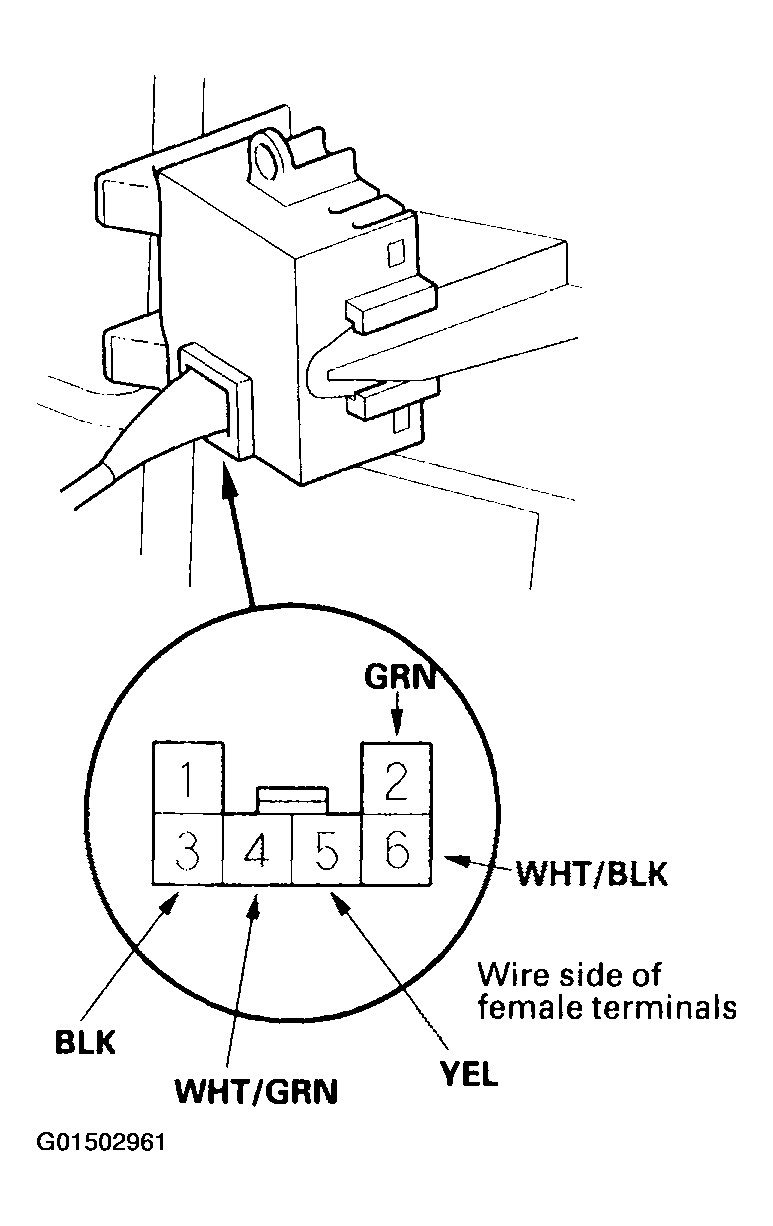 Courtesy of AMERICAN HONDA MOTOR CO., INC.
- Make sure the BRAKE LAMP light in the safety indicator does not come on and stay on when the 6P connector is disconnected and the ignition switch is turned from OFF to engine running.
- If the BRAKE LAMP light comes on, check for:
- a short to ground between the No. 11 terminal of the gauge assembly connector A (14P) and the No. 4 terminal of the failure sensor.
- a faulty safety indicator circuit (printed circuit board) in the gauge assembly.
- If the BRAKE LAMP light does not come on, go to step 4.
- Reconnect the 6P connector, Check the voltage to ground on No. 5 terminal (YEL).
- If there is 12 V, go to step 5.
- If there is 0 V, check for:
- an open in the YEL wire.
- a blown fuse.
- Reconnect the 6P connector. Make sure the BRAKE LAMP light in the safety indicator comes on and goes off when the No. 3 terminal of the 6P connector is grounded, the brake pedal is pressed, and the ignition switch is turned from OFF to engine running.
- If the BRAKE LAMP light does not go off, replace the brake failure sensor.
- If the BRAKE LAMP light goes off, check for:
- a poor ground (G552, G582).
- an open in the BLK wire.