Diagnostic Procedure
- Start engine. Check cooling fan operation. If problem is found, repair or replace as necessary. If no problem is found, go to next step.
- Using cooling system pressure tester, apply 23 psi (157 kPa) to cooling system. If pressure does not drop, go to next step. If pressure drops, locate and repair cooling system leaks as necessary.
- Apply pressure to radiator cap and check relief pressure. Relief pressure should be 9-14 psi (59-98 kPa). If relief pressure is as specified, go to next step. If relief pressure is not as specified, replace radiator cap.
- Remove thermostat. Ensure thermostat valve seats tightly at room temperature. Check thermostat opening temperature and valve lift. Thermostat should open at 170°F (77°C) and close at 161°F (72°C). Valve should lift more than .32" (8 mm) at 226°F (108°C). If thermostat does not operate as specified, replace thermostat. If thermostat is okay, go to next step.
- Remove ECT sensor located on water outlet pipe, at rear of engine. Place ECT sensor in heated water. Measure resistance between sensor terminals, with water at specified temperatures. See ENGINE COOLANT TEMPERATURE SENSOR RESISTANCE table. If resistance is not as specified, replace ECT sensor and retest system. If resistance is as specified, check for other possible causes of engine overheating and repair as necessary. See Fig 1.
ENGINE COOLANT TEMPERATURE SENSOR RESISTANCE
| Temperature - °F (°C) |
Ohms |
| 68 (20) |
2100-2900 |
| 122 (50) |
680-1000 |
| 194 (90) |
236-260 |
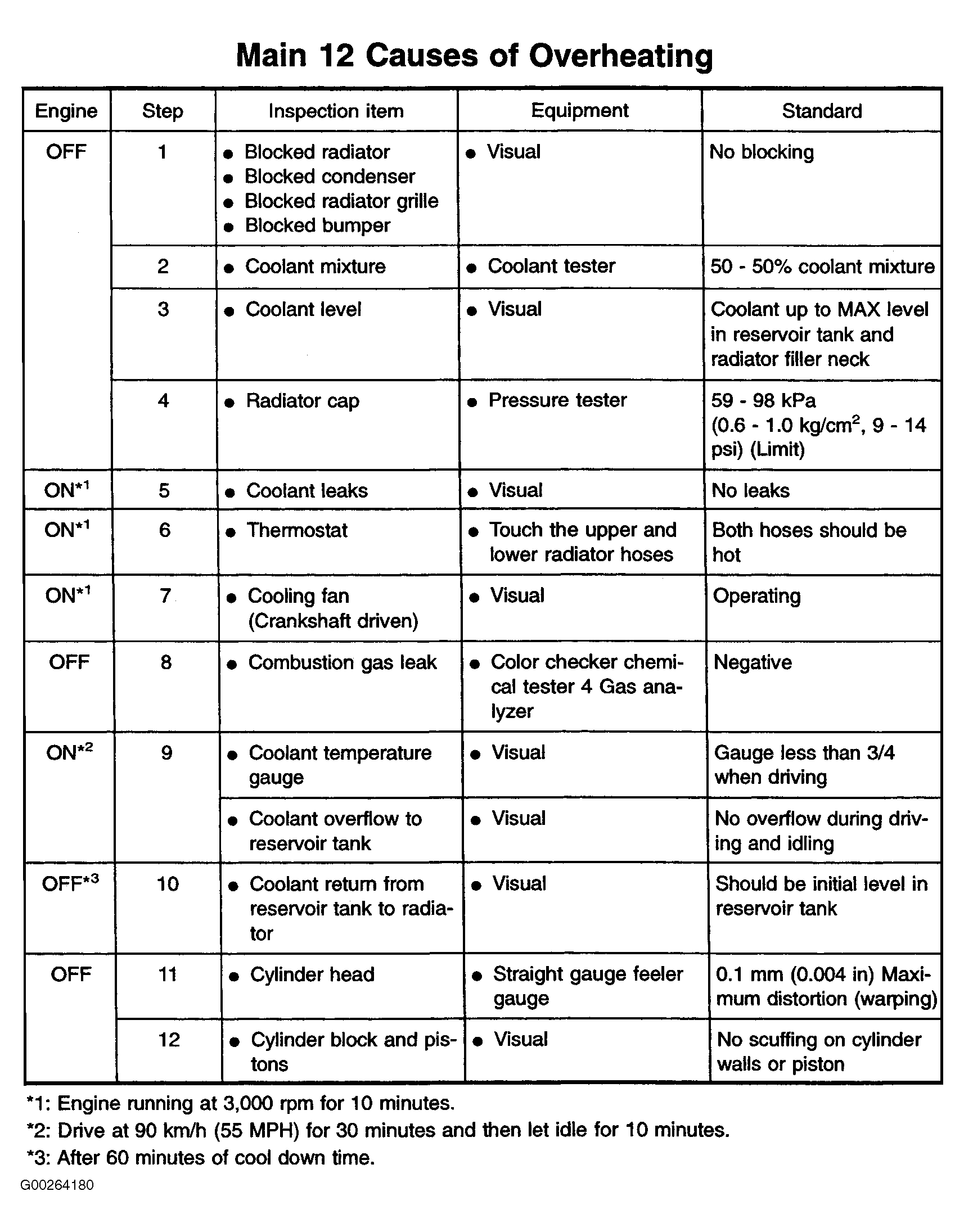 Courtesy of NISSAN MOTOR CO., U.S.A.