Alternator Tests
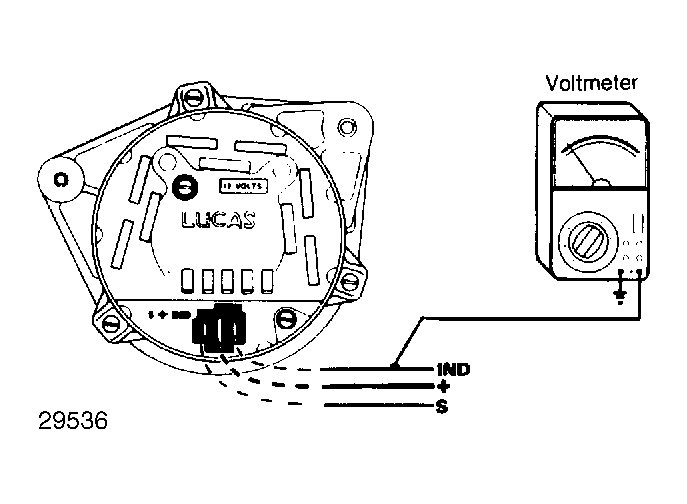
- Remove connector from alternator. Turn ignition on. Connect negative voltmeter lead to ground. Attach positive lead, in turn, to each disconnected lead. Voltmeter should read battery voltage at each lead. See Fig 1.
- If reading is zero at main output lead, check wiring to starter solenoid and battery. If reading is zero when connected to "IND" lead, check for grounded or open circuit between warning light and alternator connector.
 Courtesy of JAGUAR CARS, INC.
- If reading is zero when connected to "S" lead, check wiring back to starter solenoid and battery. A break in sensing lead will result in alternator not charging and warning light not operating.
- Attach connector to alternator and turn ignition on. With negative lead of voltmeter still attached to ground, connect positive lead to "IND" terminal. Voltmeter should read about 2 volts.
- If reading is zero, surge protection diode may be defective. If voltmeter reads battery voltage, brushes, rotor or regulator may be defective.
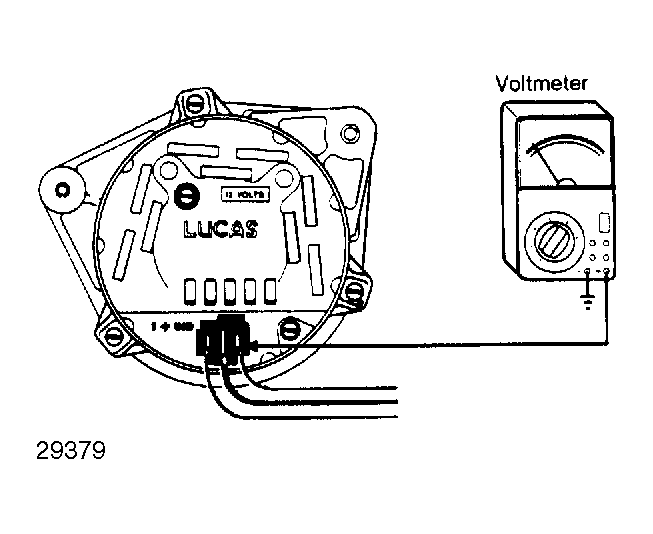
- With voltmeter negative lead attached to ground, attach positive lead to metal link on regulator. See Fig 2. Turn ignition on. Voltmeter should read about .50 volt. If 12 volts are indicated, regulator is defective.
 Courtesy of JAGUAR CARS, INC.
- If reading is .50 volt, but 12 volts was indicated in step 4), check brushes, rotor, and slip rings. If warning light operates with ignition off, but goes out when ignition is on, check voltage at "IND" terminal with ignition off. If battery voltage is indicated, rectifier (diode) assembly is faulty.
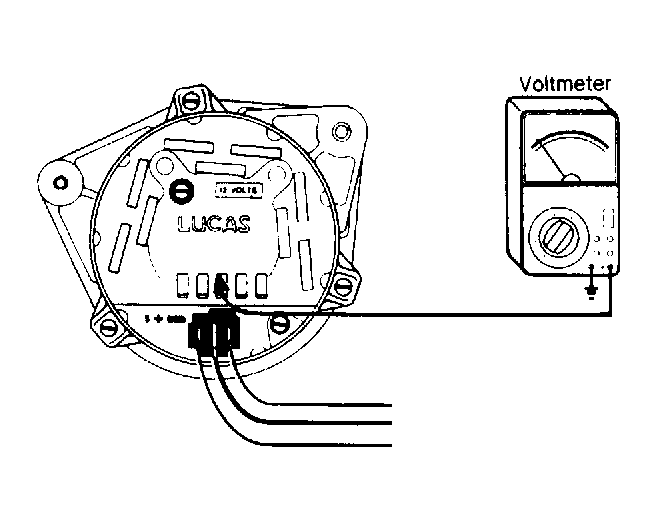
- Start and run engine at 2500 RPM. With voltmeter negative lead attached to ground, attach positive lead to "IND" terminal and note voltage. See Fig 3.
 Courtesy of JAGUAR CARS, INC.
- Connect positive lead to main output (+) terminal. Voltage readings should be the same. If a difference of more than .50 volt is present, rectifier (diode) assembly may be defective.
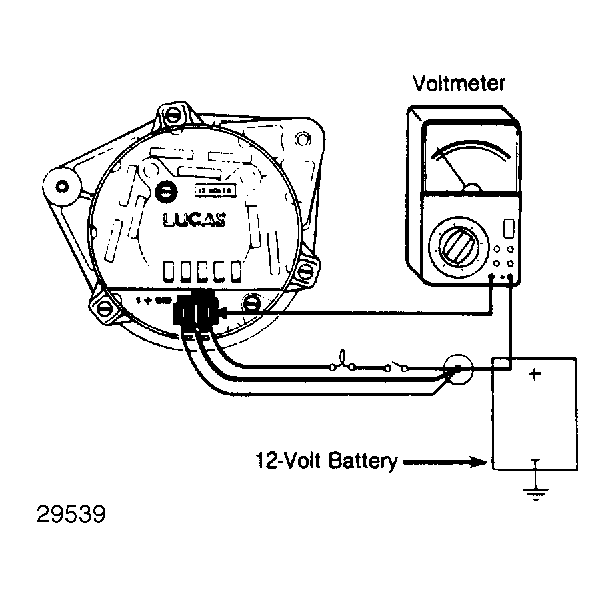
- Connect voltmeter between positive battery terminal and main output (+) terminal. See Fig 4. Start and run engine at 2500 RPM. Voltage reading should not exceed .50 volt.
 Courtesy of JAGUAR CARS, INC.
- If voltage reading is higher than .50 volt, check wiring from alternator to battery for loose or dirty connections. If warning light glows while engine is running, problem may be a faulty rectifier (diode) assembly or dirty or loose connections in alternator to battery wiring.
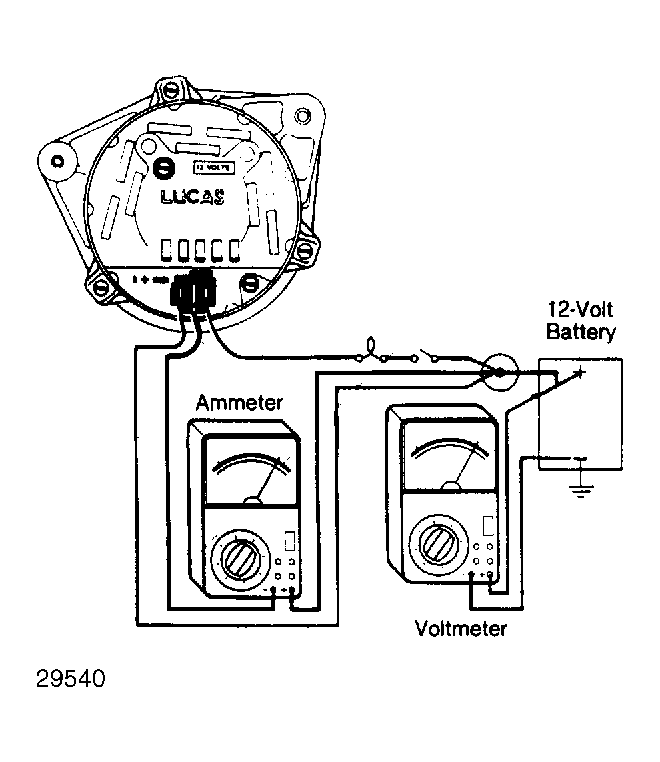
- Turn ignition off. Disconnect battery ground cable. Disconnect alternator. Connect an ammeter between main output terminal (+) and disconnected main lead. See Fig 5. Connect a jumper wire between "IND" terminal and "IND" lead.
- Reconnect battery cable. Turn on all accessories (except wipers) for one minute. Start and run engine at 2100 RPM. Ammeter should read maximum alternator output.
- If output is low, use a jumper wire to short metal link on regulator to ground. Repeat step 13). If maximum output is now present, voltage regulator may be defective. If output is still low, stator windings may be defective.
- Turn ignition off and disconnect battery ground cable. Connect ammeter in series with alternator main output lead and starter solenoid. Reconnect battery cable. Connect voltmeter across battery terminals.
- Start and run engine at 2100 RPM until ammeter reads less than 10 amps. Voltmeter should read 13.6-14.4 volts. An incorrect reading indicates a faulty regulator.
 Courtesy of JAGUAR CARS, INC.