Engine Does Not Crank Or Relay Clicks
- Check battery condition. Battery voltage should be 12 volts or more. Load test battery at approximately one-half cold cranking amperage rating. See load tester manufacturer's instructions. If battery voltage is less than 12 volts or loaded battery voltage is less than 9.6 volts, service battery or charging system as necessary. If battery is okay, go to next step.
- Measure voltage between positive battery post and negative battery cable connection at engine block. If battery voltage exists, go to next step. If battery voltage does not exist, replace battery ground cable.
- Measure voltage between positive battery post and starter motor case. If battery voltage exists, go to next step. If battery voltage does not exist, clean starter motor mounting flange and ensure starter motor is properly installed.
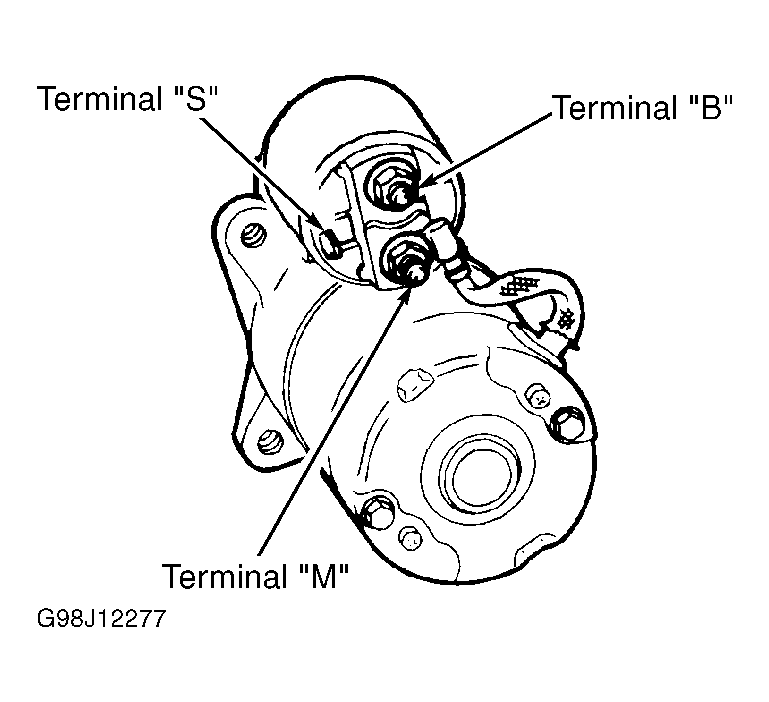
- Turn ignition off. Measure voltage between starter solenoid terminal "B" and ground. See Fig 1
. If battery voltage exists, go to next step. If battery voltage does not exist, replace battery positive cable.
 Courtesy of FORD MOTOR CO.
- Connect a remote starter switch between terminal "B" and "S" at starter solenoid. See Fig 1
. Engage remote starter switch. If starter engages and cranks engine, go to next step. If starter motor does not engage and crank engine, replace starter motor. See STARTER MOTOR
under REMOVAL & INSTALLATION.
- Disconnect Red wire from starter solenoid terminal "S". See Fig 1
. Measure voltage between starter solenoid terminal "S" connector (Red wire) and ground with ignition switch in START position. If battery voltage does not exist, go to next step. If battery voltage exists, repair poor connection at terminal "S" at starter and check system operation.
- Turn ignition off. Disconnect Tan/Red wire from starter relay. Starter relay is located in right rear corner of engine compartment. Measure voltage at Tan/Red wire with ignition switch in START position. If battery voltage exists, go to next step. If battery voltage does not exist, go to step 10
.
- Turn ignition off. Measure voltage between ground and each Red wire at starter relay. If battery voltage exists at one Red wire, go to next step. If battery voltage does not exist at either Red wire, inspect Gray fusible links near battery. If fusible links are okay, repair open circuit between starter relay at battery. See WIRING DIAGRAMS
.
- Connect Tan/Red wire to starter relay. Measure voltage between ground and each Red wire at starter relay with ignition switch in START position. Battery voltage should exist at both Red wires. If battery voltage does not exist at one Red wire, replace starter relay. If battery voltage exists at both Red wires, repair open circuit between starter relay and starter solenoid terminal "S".
- Turn ignition off. Remove and inspect central junction box fuse No. 21 (15-amp). If fuse is blown, go to next step. If fuse is okay, go to step 15
.
- Remove central junction box fuse No. 20 (5-amp). Measure resistance between central junction box fuse No. 21 output cavity and ground. If resistance is 100 ohms or less, go to next step. If resistance is greater than 100 ohms, install new fuse and check system operation.
- Disconnect Digital Transmission Range (DTR) sensor harness connector. Measure resistance between central junction box fuse No. 21 output cavity and ground. If resistance is greater than 100 ohms, go to next step. If resistance is 100 ohms or less, repair short to ground in central junction box or Dark Blue/Orange wire between fuse cavity and DTR sensor.
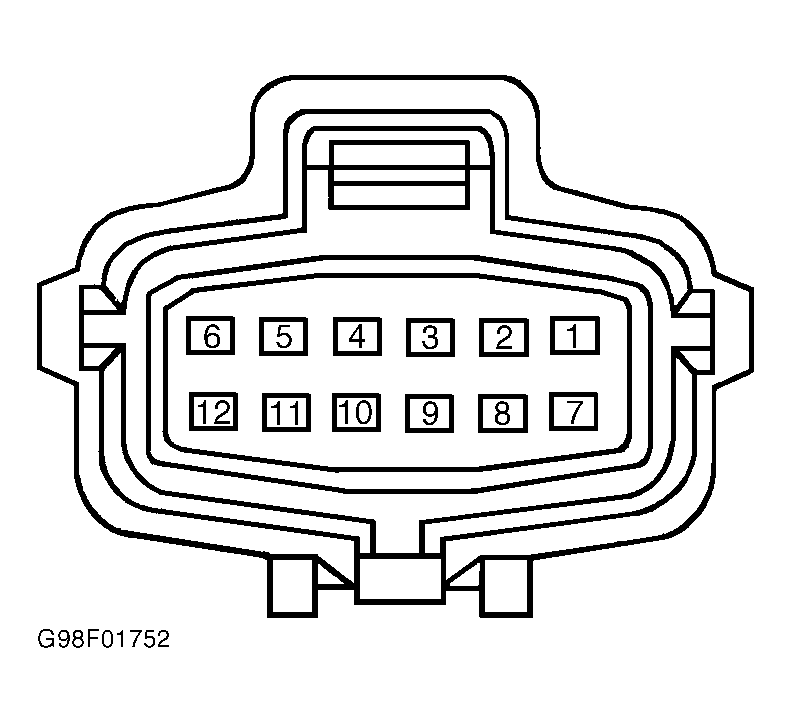
- Measure resistance between DTR sensor connector terminal No. 12 (Tan/Red wire) and ground. See Fig 2
. If resistance is 100 ohms or less, go to next step. If resistance is greater than 100 ohms, check DTR sensor adjustment and adjust as necessary. See DIGITAL TRANSMISSION RANGE (DTR) SENSOR
under ADJUSTMENTS. If adjustment is okay, replace transmission range sensor.
 Courtesy of FORD MOTOR CO.
- Disconnect Tan/Red wire from starter relay. Measure resistance between DTR sensor connector terminal No. 12 (Tan/Red wire) and ground. If resistance is 100 ohms or less, repair short to ground in Tan/Red wire between DTR sensor and starter solenoid. If resistance is greater than 100 ohms, replace starter relay.
- Measure voltage between central junction box fuse No. 21 input cavity and ground with ignition switch in START position. If battery voltage is not present, go to next step. If battery voltage is present, go to step 18
.
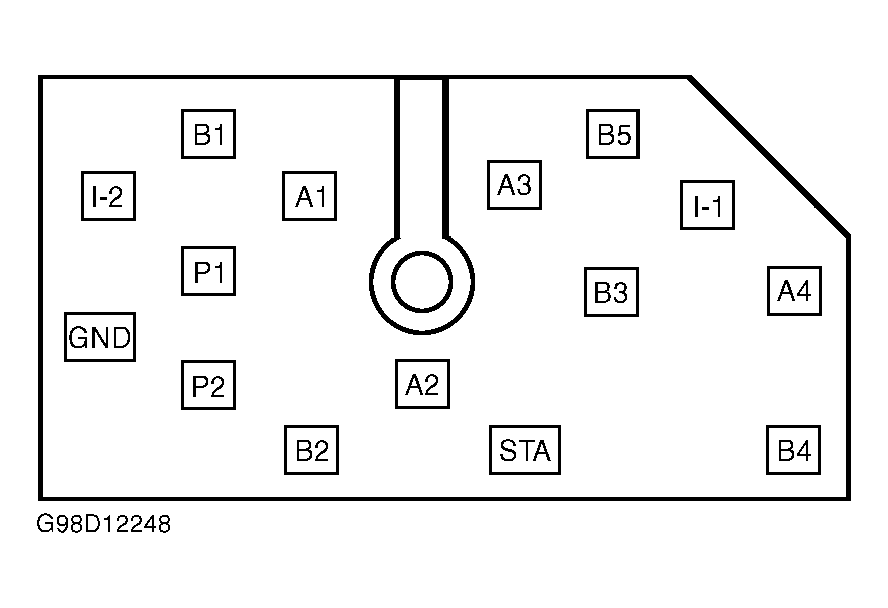
- Disconnect ignition switch harness connector. Measure voltage between ignition switch connector terminal B4 (Light Green/Violet wire) and ground. See Fig 3
. If battery voltage is present, go to next step. If battery voltage is not present, repair open circuit in battery junction box or Light Green/Violet wire between ignition switch and fuse No. 111. See POWER DISTRIBUTION article in WIRING DIAGRAMS.
 Courtesy of FORD MOTOR CO.
- Measure resistance of Red/Light Blue wire between central junction box fuse No. 21 input cavity and ignition switch connector terminal STA. See Fig 3
. If resistance is 5 ohms or less, replace ignition switch. If resistance is greater than 5 ohms, repair open in Red/Light Blue wire between ignition switch and instrument panel fuse box. See WIRING DIAGRAMS
.
- Install central junction box fuse No. 21. Disconnect Digital Transmission Range (DTR) sensor connector. Measure voltage between DTR sensor connector terminal No. 10 (Dark Blue/Orange wire) and ground with ignition switch in START position. See Fig 2
. If battery voltage exists, go to next step. If battery voltage does not exist, repair open in Dark Blue/Orange wire between DTR sensor and instrument panel fuse box.
- Disconnect Tan/Red wire from starter relay. Measure resistance of Tan/Red wire between starter relay connector terminal and DTR sensor connector terminal No. 12. If resistance is greater than 5 ohms, repair open in Tan/Red wire between starter relay and DTR sensor. If resistance is 5 ohms or less, check DTR sensor adjustment and adjust as necessary. See DIGITAL TRANSMISSION RANGE (DTR) SENSOR
under ADJUSTMENTS. Restore connections and check system operation. If starter does not crank, replace DTR sensor.