System Inspection
- Check vacuum hoses for proper connections, clogs or leaks. Replace or correct as necessary. See Fig 1
. Warm engine to normal operating temperature and allow to idle.
- Disconnect vacuum hose "A" from purge control valve No. 1. Connect vacuum gauge to disconnected hose. See Fig 2
. Increase engine speed to 2500 RPM and verify gauge displays more than 5.9 in Hg vacuum. If vacuum reading is not correct, check coolant thermovalve. Reconnect hose "A" to purge control valve No. 1.
- Disconnect vacuum hose "B" from canister and connect vacuum gauge to disconnected hose. See Fig 2
. Verify vacuum exists when engine speed exceeds 1400 RPM. If no vacuum is present, check purge solenoid valve, purge control valve No. 3 and terminal 1V of ECU. See PIN VOLTAGE CHART
S article. Reconnect hose "B" to canister.
- Disconnect evaporation hose from evaporation pipe. Connect vacuum pump to evaporation pipe. See Fig 2
. Operate vacuum pump and verify no vacuum is held. If vacuum is held, inspect check-and-cut valve and evaporation pipe for clogging.
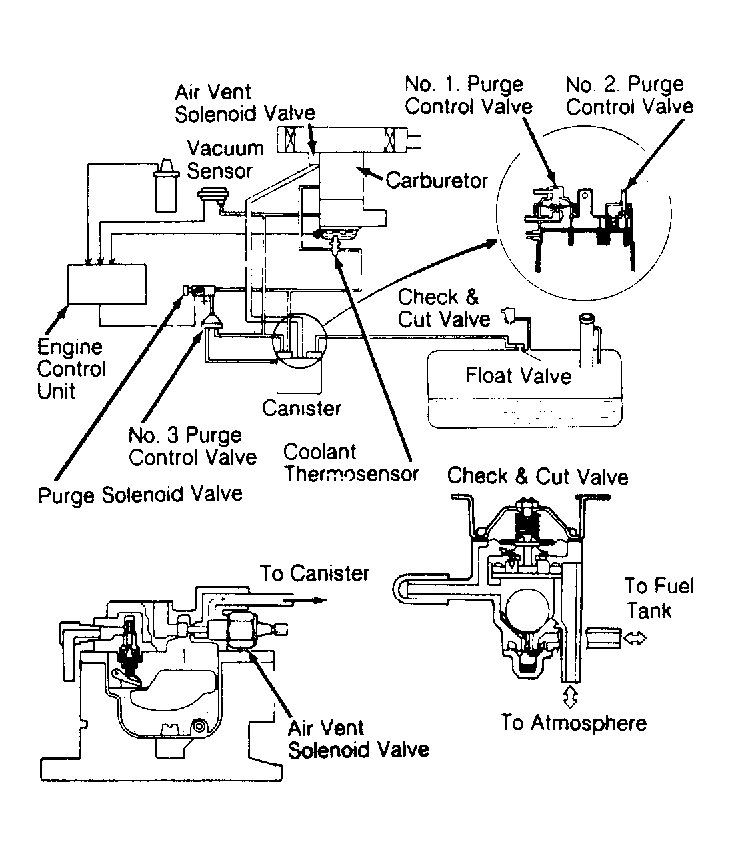 Courtesy of MAZDA MOTORS CORP.
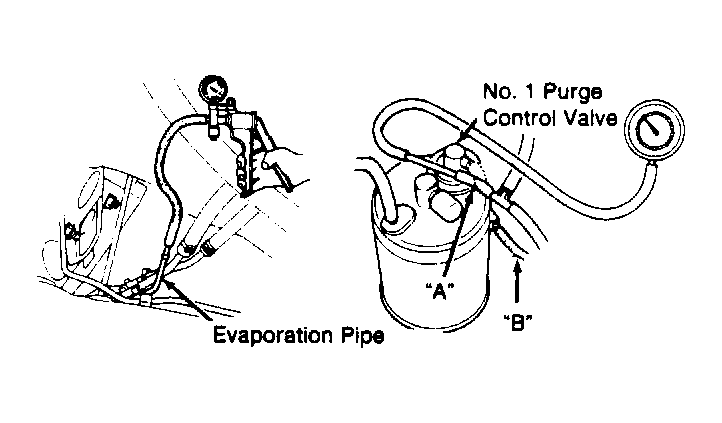 Courtesy of MAZDA MOTORS CORP.