Control Valve Body Inspection
- Inspect the control valve body (301) for the following conditions:
- Worn or damaged oil pump drive shaft bearing journal (not serviceable separately from the control valve body)
- Damaged or porous casting
- Damaged sealing surfaces
- Debris in fluid passages
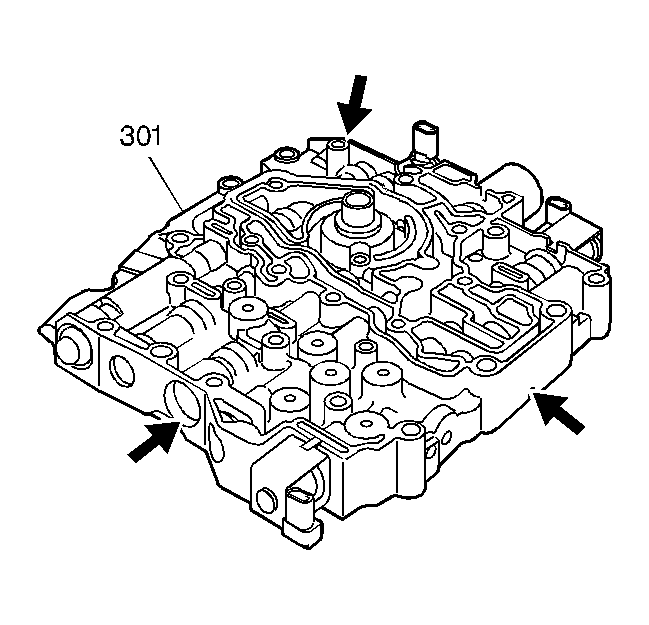 Courtesy of GENERAL MOTORS CORP.
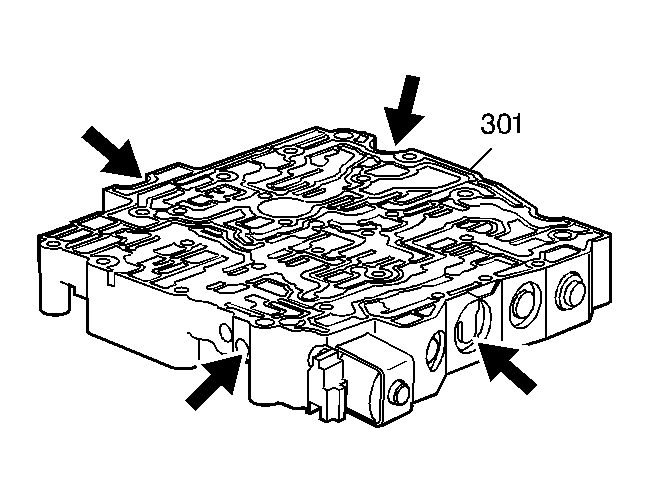 Courtesy of GENERAL MOTORS CORP.
- Use a small pick or screwdriver. Before disassembly, inspect the control valve body (301) components for the following conditions:
- Valves binding or sticking in their bores or bushings
- Broken, missing or damaged springs
- Missing or damaged retainers
- Damaged solenoid valves
- Debris in valve line-ups or solenoid valves
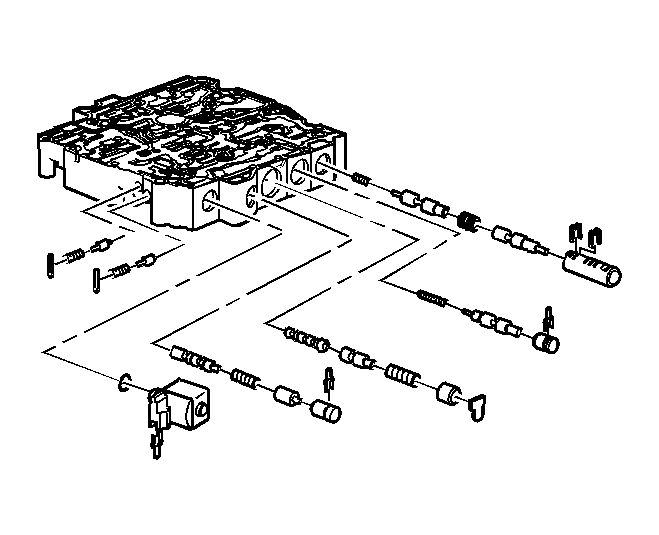 Courtesy of GENERAL MOTORS CORP.
- During disassembly, inspect the control valve body for the following conditions:
- Worn or damaged valves, valve bores or bushings
- Broken, missing or damaged springs
- Missing or damaged retainers
- Damaged solenoid valves
- Debris in valve line-ups or solenoid valves
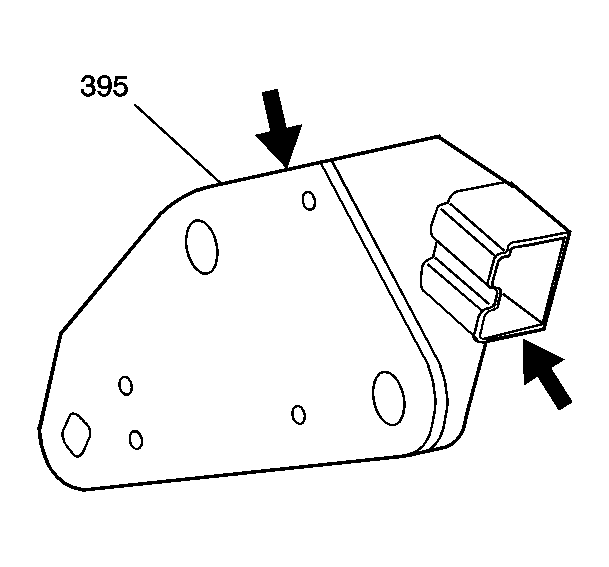 Courtesy of GENERAL MOTORS CORP.
- Inspect the transmission fluid pressure (TFP) manual valve position switch assembly (395) for the following conditions:
- Damaged electrical connector terminals
- Damaged seals
- Damaged switch membranes
- Debris on the switch membranes