Test 10 - Valve Relay Problem
- Turn ignition off. Remove valve relay from relay box. Check resistance between valve relay terminal No. 30 and No. 87. See Fig 1. Resistance should be more than 1 megohm. Check resistance between valve relay terminal No. 30 and No. 87a. Resistance should be less than .5 ohm. If resistance is not as specified, replace relay. Connect battery positive to relay terminal No. 85 and battery negative to relay terminal No. 86. Check resistance between valve relay terminal No. 30 and No. 87. Resistance should be less than .5 ohm. Check resistance between valve relay terminal No. 30 and No. 87a. Resistance should be more than 1 megohm. Check continuity between terminal No. 86 and terminals No. 87 and 87a. Continuity should not exist. If resistance is not as specified, replace relay. Go to next step.
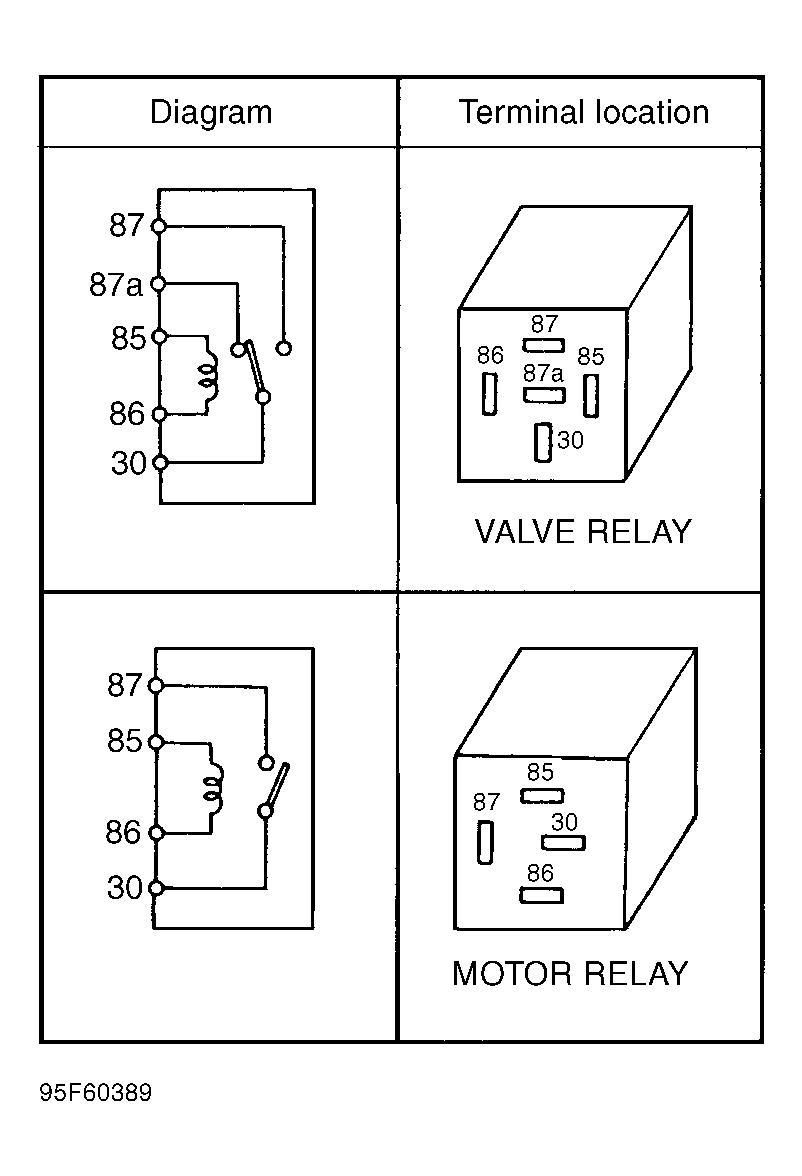 Courtesy of SUBARU OF AMERICA, INC.
- Disconnect 2-terminal relay box connector F8. Check voltage at relay box connector terminal No. 1. See Fig 2. If voltage exists, go to next step. If voltage does not exist, repair wiring harness as necessary and check fuse No. 19.
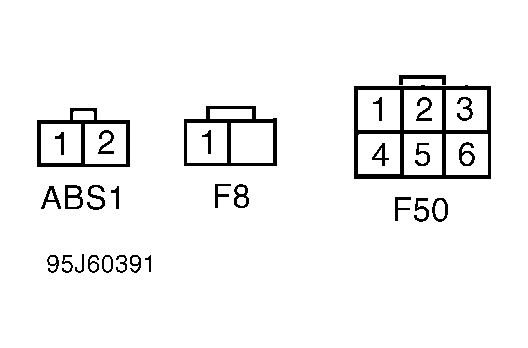 Courtesy of SUBARU OF AMERICA, INC.
- Disconnect relay box connector F50. Check resistance between ground and relay box connector terminal No. 3. If resistance is .5 ohm or more, repair wiring. If resistance is less than .5 ohm, go to next step.
- Disconnect hydraulic unit connector ABS1. Reconnect relay box connector F8. Check voltage at valve relay connector (relay box cavity) terminal No. 87. If battery voltage exists, go to next step. If battery voltage does not exist, replace relay box and check fuse No. 19.
- Disconnect hydraulic unit connector ABS1. Reconnect relay box connector F8. Check voltage at valve relay connector terminal No. 87. If battery voltage exists, go to next step. If battery voltage does not exist, replace relay box and check fuse No. 19.
- Check continuity between valve relay connector terminal No. 30 and hydraulic unit connector ABS1 terminal No. 2. If continuity exists, go to next step. If continuity does not exist, replace relay box.
- Check continuity between hydraulic unit connector ABS1 terminal No. 2 and ground. If continuity exists, go to next step. If continuity does not exist, replace relay box and check fuse SBF6.
- Disconnect ABS control unit connector. Check voltage at ABS control unit connector terminal No. 2. If battery voltage exists, replace relay box and check fuse No. 19 and fuse SBF6. If battery voltage does not exist, turn ignition on. Recheck voltage at ABS control unit connector terminal No. 2. See Figure. If battery voltage exists, replace relay box and check fuse No. 19, fuse SBF6. If battery voltage does not exist, go to next step.
- Turn ignition off. Check continuity between valve relay connector terminal No. 30 (+) and 6-pin relay box connector terminal No. 2 (-). If continuity exists, replace relay box. If continuity does not exist, go to next step.
- Check continuity between relay box connector F50 terminal No. 3 and valve relay connector terminal No. 87a. If continuity exists, go to next step. If continuity does not exist, replace relay box.
- Check voltage at relay box connector F50 terminal No. 3. If voltage exists, replace relay box and check all fuses. If voltage does not exist, turn ignition on. Recheck voltage at relay box connector F50 terminal No. 3. If voltage exists, replace relay box and check all fuses. If voltage does not exist, go to next step.
- Turn ignition off. Reinstall relay in relay box. Check resistance between relay box connector F50 terminals No. 1 and No. 5. If resistance is 93-113 ohms, go to next step. If resistance is not 93-113 ohms, replace relay box.
- Check resistance between relay box connector F50 terminal No. 1 and ground. If continuity exists, replace relay box and check all fuses. If continuity does not exist, go to next step.
- Check voltage at relay box connector F50 terminal No. 1. If voltage exists, replace relay box and check fuse No. 19 and SBF45A. If voltage does not exist, turn ignition on. Recheck voltage at relay box connector F50 terminal No. 1. If voltage exists, replace relay box and check fuse No. 19 and SBF45A. If voltage does not exist, go to next step.
- Turn ignition off. Reconnect relay box connector F50. Check resistance between ABS control unit connector terminals No. 27 and No. 47. If resistance is 93-113 ohms, go to next step. If resistance is not 93-113 ohms, repair wiring and check fuse No. 18.
- Check continuity between ABS control unit connector terminal No. 27 and ground. If continuity does not exist, go to next step. If continuity exists, repair wiring and check fuse No. 18.
- Check voltage between ABS control unit connector terminal No. 27 and ground. If voltage exists, repair wiring and check fuse No. 18. If voltage does not exist, turn ignition on. Recheck voltage between ABS control unit connector terminal No. 27 and ground. If voltage exists, repair wiring and check fuse No. 18. If voltage does not exist, go to next step.
- Turn ignition off. Disconnect hydraulic unit connector F9. Check resistance between hydraulic unit connector F9 terminal No. 1, 2, 3 and 4 and relay box connector F8 terminal No. 2. See Figure and Figure
. If resistance is 7.8-9.2 ohms at each terminal, go to next step. If resistance is not 7.8-9.2 ohms at all terminals, replace hydraulic unit.
- Check resistance between hydraulic unit connector F9 terminal No. 5, 6, 7 and 8 and relay box connector F8 terminal No. 2. If resistance is 3.8-4.8 ohms at each terminal, go to next step. If resistance is not 3.8-4.8 ohms at all terminals, replace hydraulic unit.
- Check continuity between hydraulic unit connector F9 terminal No. 4 and ground. If continuity does not exist, go to next step. If continuity exists, repair wiring and check all fuses.
- Check voltage between hydraulic unit connector F9 terminal No. 4 and ground. If voltage exists, replace hydraulic unit and check all fuses. If voltage does not exist, turn ignition on. Recheck voltage between hydraulic unit connector F9 terminal No. 4 and ground. If voltage does not exist, go to next step. If voltage exists, replace hydraulic unit and check all fuses.
- Turn ignition off. Disconnect hydraulic unit connector F8. Check voltage at ABS control unit connector terminals No. 3, 4, 23, 24, 30, 31, 50 and 51. If voltage exists, repair wiring and check all fuses. If voltage does not exist, turn ignition on. Recheck voltage at ABS control unit connector terminals No. 3, 4, 23, 24, 30, 31, 50 and 51. If voltage exists, repair wiring and check all fuses. If voltage does not exist, go to next step.
- Turn ignition off. Disconnect hydraulic unit connector F8. Check continuity between ground and ABS control unit connector terminals No. 3, 4, 23, 24, 30, 31, 50 and 51. If continuity exists, repair wiring between hydraulic unit and ABS control unit. If continuity does not exist, go to next step.
- Reconnect hydraulic unit connector F8. Check resistance between ABS control unit connector terminal No. 1 and terminals No. 23, 24, 30 and 31. If resistance is 8.3-9.7 ohms, go to next step. If resistance is not 8.3-9.7 ohms, repair wiring.
- Check resistance between ABS control unit connector terminal No. 1 and terminals No. 3, 4, 50 and 51. If resistance is 4.3-5.3 ohms, go to next step. If resistance is not 4.3-5.3 ohms, repair wiring.
- Check ABS control unit and hydraulic unit connector contacts. Repair connector contacts as needed. If contacts are okay, go to next step.
- Reconnect all connectors. Erase memory. Recheck trouble codes. If same trouble code returns, replace ABS control unit. If other trouble codes exist, go to proper test procedure. If no trouble codes exist, problem was a temporary poor contact. Recheck harness and connectors.